
When considering a career in real estate or simply looking to understand how much a real estate agent earns per sale house in New Jersey, it’s important to recognize the factors that contribute to an agent’s earnings. The commission structure plays a vital role in determining how much a real estate agent earns per sale, and in New Jersey, this can vary based on the property value and market conditions. By exploring these factors, you can better understand how agents are compensated and how they navigate this competitive industry. In this article, we’ll uncover how a real estate agent earns per sale and what you can do to avoid common pitfalls that may affect their overall earnings.
Factors That Affect How Much a Real Estate Agent Earns Per Sale
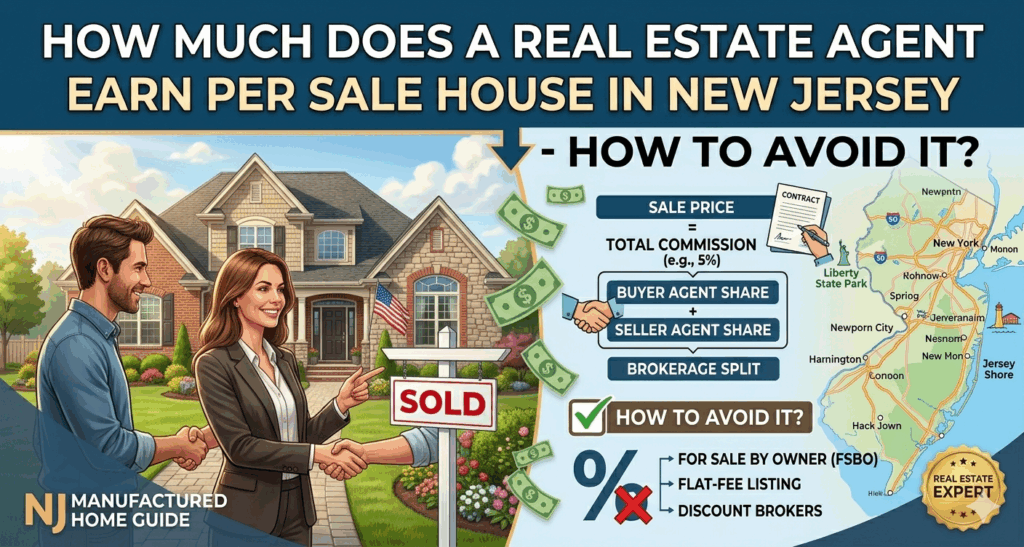
The sale price and the agreed-upon commission rate determine a real estate agent’s commission. A real estate agent earns a fixed percentage of the sale price per sale. For example, if a home sells for $500,000 and the agent’s commission rate is 2.5%, the agent would earn $12,500 before splitting the commission with their brokerage. If the agent is working under a 50/50 split, the agent’s net earnings would be $6,250. This split is crucial in understanding how much a real estate agent earns per sale.
How Much Does a Real Estate Agent Earn Per House Sale in New Jersey?
The amount a real estate agent earns per house sale in New Jersey can vary widely, depending on the property’s location and sale price. For instance, in high-demand areas such as Jersey City or Hoboken, a real estate agent could earn significantly more. On a $600,000 home, a real estate agent could earn $18,000 in commission before the brokerage split. This illustrates how much a real estate agent earns per house sale in New Jersey, especially in competitive markets.
Are Commission Rates Negotiable for Real Estate Agents in New Jersey?
Yes, real estate agents in New Jersey can negotiate their commission rates. In some cases, especially for high-value properties or multiple listings, a real estate agent earns a higher per-sale rate. A well-established agent with years of experience and an extensive client base can negotiate a better commission structure, potentially increasing the amount a real estate agent earns per sale.
How Real Estate Agents in New Jersey Can Earn More Per Sale
New Jersey is a competitive real estate market, and agents who specialise in luxury properties or offer extra services, such as home staging and professional photography, can increase their earnings. By marketing properties efficiently, such as using social media ads or targeting high-net-worth individuals, a real estate agent earns not only from the sale itself but also by offering a broader range of services to clients. Specialising in luxury homes in markets like Jersey City and Hoboken can further boost a real estate agent’s earnings per sale.
The Average Commission for a Real Estate Agent in New Jersey
Real estate agents in New Jersey typically receive a commission of about 5% on each home sale, split between the buyer’s and seller’s agents. A real estate agent earns, per sale, an average of 2.5% of the total sale price. The seller usually pays this commission at closing, and it is typically divided between the brokerage and the agent. In competitive markets, a real estate agent can earn substantial commissions on high-value properties, ranging from $15,000 to $30,000 per sale, before the brokerage split.
How Much Does a Real Estate Agent Earn on a $500,000 Home in New Jersey?
If a real estate agent sells a home for $500,000, their commission at a 2.5% rate would amount to $12,500 before the brokerage split. In a 50/50 split, the agent would take home $6,250. This example shows how a real estate agent earns per sale in New Jersey for homes in the average price range. Because the New Jersey market is competitive, agents can earn substantial income by closing multiple deals in a year.
Can a Real Estate Agent Earn More Per Sale in a Competitive Market?
Yes, a real estate agent earns more per sale in competitive markets like Jersey City and Hoboken, where home prices tend to be higher. In addition to higher-priced homes, agents who use effective marketing strategies and leverage digital tools, such as social media advertising, can close deals faster and earn more per sale. Specialising in high-value properties or focusing on specific niches, such as waterfront properties, can further increase an agent’s income.
Real-Life Example: How Much a Real Estate Agent Earns Per Sale in New Jersey
In a real-life example from Jersey City, an agent sold a home for $600,000 and earned $18,000 in commission before the brokerage split. After splitting the commission with their brokerage, the agent took home $9,000. This example illustrates how a real estate agent earns per house sale in New Jersey, even in competitive, high-demand areas.
The 80/20 Rule: Maximising Earnings Per Sale
According to the 80/20 rule in real estate, 80% of an agent’s earnings come from 20% of their clients. Therefore, a real estate agent earns more per sale when they focus on high-value clients or luxury listings. By specialising in high-end markets and working with clients who can afford premium properties, agents can increase their earnings per sale.
How Many Homes Does a New Jersey Real Estate Agent Need to Sell to Earn $100,000?
To earn $100,000 a year, a New Jersey real estate agent typically needs to sell around 20 homes, assuming a commission of 2.5% on each sale. This figure can vary depending on the average sale price and the commission split. However, with a steady stream of clients and successful transactions, a real estate agent earns enough per sale to hit six-figure earnings over the course of a year.
Do Real Estate Agents in New Jersey Get Paid if a House Doesn’t Sell?
Real estate agents in New Jersey only earn commission when the house sells. If the property doesn’t sell or the deal falls through, the agent won’t be paid. This emphasises the importance of having effective marketing and sales strategies in place to close deals and ensure that the agent earns a commission per sale.
Conclusion: How Much Can a Real Estate Agent Earn Per Sale in New Jersey?
A real estate agent earns a commission per sale, depending on factors such as the commission rate, market conditions, and property value. On average, an agent in New Jersey makes 2.5% of the home’s final sale price. Whether selling a $500,000 home or a multi-million dollar luxury property, agents in New Jersey have the opportunity to earn substantial commissions by closing deals efficiently. Specialising in certain areas, negotiating commission rates, and providing additional services can further increase a real estate agent’s earnings per sale in New Jersey.
FAQs on Realtor Earnings in New Jersey
How much does a real estate agent make in New Jersey?
In New Jersey, the average total commission on a home sale is 5 per cent, typically split between the buyer’s and seller’s agents. Each agent typically takes about 2.5% of the home’s final sale price. This ensures that agents are incentivized to close as efficiently as possible while remaining competitive with the national average.
How much does a New Jersey real estate agent earn on a house worth $500,000?
On the sale of a $500,000 home with a 2.5 per cent commission rate, a New Jersey real estate agent earns $12,500 before the brokerage split. If the agent has a standard 50/50 split with their broker, their net take-home pay for that single transaction is $6250.
How much does an NJ real estate agent make a year on average in 2023?
In New Jersey, an average agent earned $95,268 in 2023, according to industry data. That said, earnings vary widely depending on the number of transactions closed and the specific market (luxury high-volume markets like Jersey City or Hoboken).
Are New Jersey real estate agents able to negotiate commission?
Commission rates in New Jersey are negotiable. Agents commonly vary their percentages for expensive luxury residences or when they are handling several listings for a single client. Seasoned agents draw on their market knowledge and negotiation skills to set rates that account for a property’s worth and what’s needed in terms of marketing.
How many homes does a NJ realtor need to sell to make $100,000 a year?
In New Jersey, that means a realtor must sell at least 20 houses per year to earn a six-figure salary (around $100,000). This is an estimate that can vary based on the average sale price of the properties and the specific commission split agreed upon between the agent and the sponsoring brokerage.
What does the real estate industry mean by the 80/20 Rule?
Also known as the Pareto Principle, the 80/20 Rule states that real estate agents make 80% of their income from 20% of their clients. This principle suggests that agents should spend most of their time marketing and networking with high-value clients and repeat referral sources, as this will yield their highest annual profit margin.
Do real estate agents in New Jersey get paid if your house doesn’t sell?
No, in New Jersey, most realtors work on a performance-based commission basis. If the transaction does not close or if the listing agreement expires without a sale, the agent earns no commission. Real estate agents only get paid after the sale is legally complete, at closing.
How much is the average property tax on a $500K house in NJ? Property taxes on a $500,000 home in New Jersey are typically between $10,000 and $15,000 a year. Because New Jersey has some of the highest property tax rates in the U.S., these costs are a key consideration agents must address with prospective buyers when closing a deal.
How many new realtors don’t make it past the first twelve months?
In fact, statistically, five out of six new realtors leave the business in their first twelve months. Some of the popular reasons for this high failure rate are insufficient professional experience, poor digital marketing strategies and systems to retain clients in a competitive market.
What is the New Jersey 3-Year Rule?
The 3-year rule in New Jersey. There is a 3-year time limitation from the date of discovery to file legal action involving real property. That includes disputes related to breaches of contract or misrepresentations. Agents need to be aware of such legal timelines and the implications for protecting themselves and their clients after closing.