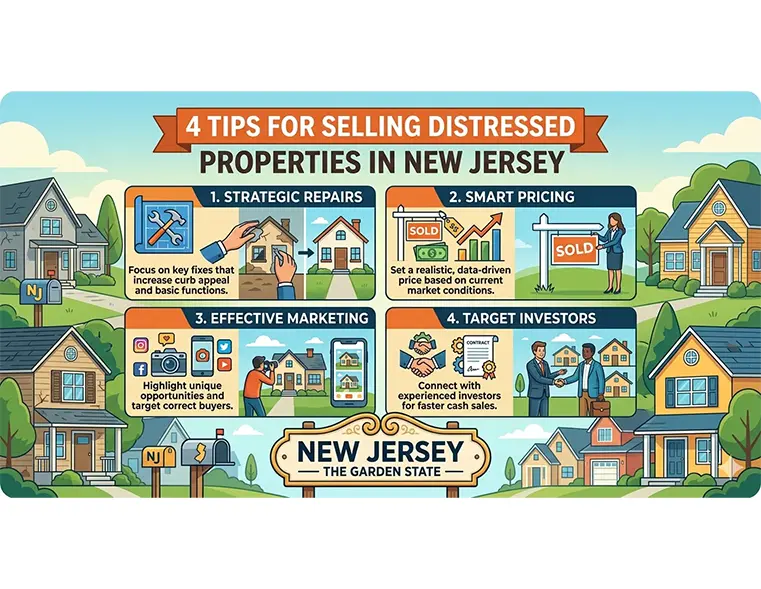
4 TIPS FOR SELLING DISTRESSED PROPERTIES IN NEW JERSEY
Selling a home can be a daunting task, even in ideal circumstances. However, when you factor in the condition of distressed properties, the challenges can multiply significantly. If you find yourself in this situation, preparing for the market’s realities is crucial. By equipping yourself with the right knowledge, you can sidestep common pitfalls and unexpected shocks that often accompany the sale of a less-than-perfect property. This preparation will not only help you navigate the selling process more smoothly but also enable you to maximize your profits when selling distressed properties.
Buyers searching the MLS usually have their sights set on move-in-ready homes. This preference can turn the process of listing distressed properties into a daunting challenge, as you might not attract many interested buyers. The few who do express interest may expect substantial discounts, often leaving you feeling undervalued by their lowball offers.
Moreover, having your home linger on the market for an extended period can diminish its perceived value even further. As the days drag on, the financial burden of property expenses continues to grow, impacting your bottom line.
To help you navigate this tricky landscape, we’ve compiled the top four tips for selling distressed properties in New Jersey.
Get Your Free Cash Offer Now!
Fill out this form to get your no-obligation all cash offer started!
Understanding What Counts as a Distressed Property in New Jersey
A distressed property in New Jersey is any home facing financial, structural, or market challenges that make it difficult to sell at full market value. These often include foreclosure, significant repairs, or long-term vacancy.
Distressed properties come in many forms, from outdated single-family homes to inherited estates that require attention. Recognizing the type of distress is the first step to a successful sale.
Key Characteristics of Distressed Homes:
- Financial Distress: Properties facing foreclosure, liens, or unpaid taxes.
- Physical Distress: Homes needing major repairs, such as roofing, plumbing, or electrical upgrades.
- Market Distress: Properties in neighborhoods with declining property values or low buyer interest.
Real Story: Last year, a homeowner in Trenton inherited a house that had been vacant for five years. The roof was leaking, and neighbors had concerns about safety. Despite these challenges, by identifying it as a distressed property and pricing strategically, she sold the house within three weeks, proving that understanding the property’s condition is critical for a quick and fair sale.
Example 1: A Newark property with outdated plumbing and a partially damaged foundation was sold to an investor for cash. Highlighting it as distressed attracted buyers willing to close fast.
Value
To ensure that the offer you’ve received is reasonable, it’s crucial for owners of distressed properties in New Jersey to assess their current market value. Start by examining recently sold homes in your area that closely resemble yours in size and features, such as having a two-car garage or a similar number of bedrooms.
If your property is just beginning to show signs of distress, it may be beneficial to engage a professional appraiser. This step will provide you with the most accurate valuation, helping you make informed decisions as you navigate the selling process.
How to Accurately Price Your Distressed Home for a Quick Sale
The fastest way to sell a distressed property in New Jersey is to price it below traditional market value, reflecting its condition and potential repair costs.
Accurate pricing requires research, local market knowledge, and understanding buyer expectations. Overpricing can keep your property on the market for months, while underpricing may leave money on the table.
Steps to Price Effectively:
- Research Comparable Sales: Review recent sales of similar distressed homes in your neighborhood.
- Calculate Repair Costs: Deduct estimated repair or renovation costs from your desired sale price.
- Consider Investor Appeal: Many buyers of distressed properties are investors seeking cash deals, so competitive pricing is essential.
- Use Professional Appraisal: A certified appraiser ensures credibility and supports your asking price.
Practical Tip: Highlight features that still hold value, like location, lot size, or structural elements, to justify your price even in a distressed market.
Example 1: A Jersey City investor paid $120,000 for a distressed brownstone needing full kitchen renovation. The original market value was $180,000, showing that transparent pricing attracts serious buyers.
Example 2: A Maplewood homeowner priced a vacant inherited property $15,000 below market after accounting for roofing and flooring repairs. The home sold in two weeks, confirming the importance of realistic pricing.
Renovation vs. Selling As-Is: Choosing the Best Approach
Selling as-is is often faster and less stressful, while renovating first can increase the final sale price. The decision depends on your timeline, budget, and target buyers.
Selling As-Is:
- No upfront costs for repairs
- Attracts investors or buyers seeking quick closings
- Often results in faster sale
Renovating First:
- Potentially higher sale price
- Wider buyer pool, including owner-occupiers
- May take longer to recoup investment
Step-by-Step Decision Process:
- Assess Repair Costs: Compare potential renovation costs to expected increase in sale price.
- Evaluate Time Constraints: Determine if you need a fast sale due to financial obligations or personal reasons.
- Consider Market Conditions: In hot markets, minor repairs may suffice to attract buyers; in slow markets, renovations can make your property more competitive.
- Consult Experts: Local contractors and real estate agents provide realistic estimates and buyer feedback.
Real Story: A homeowner in Edison debated fixing a flooded basement before selling. After cost analysis, she chose to sell as-is. An investor bought it at a slightly lower price, but the process closed in just eight days, avoiding months of renovation headaches.
What homeowners say about working with us.
Verified reviews from real New Jersey homeowners we’ve worked with — across every situation, from inherited homes to pre-foreclosure to divorce sales.
★★★★★
These guys are the best!
Sam and the team are awesome to work with! It does not matter the situation they go above and beyond to help. I would highly recommend We Buy NJ Real Estate for your real estate needs. These guys are the best!!

Elton Jean-Baptiste
★★★★★
Great company, Good People!
Working with James and Sam was a great experience. This company really cares about the people they help. I would recommend them to any one looking to sell a house.

Denise T. — NJ
★★★★★
Do not hesitate working with Sam and his team.
Do not hesitate working with Sam and his team. Easy, efficient, professional and most important, good honest people. Highly recommended

Harold
Effective Marketing Strategies for Distressed Properties
Marketing a distressed property effectively is key to attracting qualified buyers and achieving a quick sale. Highlight your home’s strengths, unique potential, and investment opportunity while being transparent about its condition.
Best Marketing Tactics:
- Professional Photos & Virtual Tours: Showcase livable spaces and privacy features, minimizing focus on damaged areas.
- Highlight Investment Potential: Emphasize possible renovations, rental income, or resale opportunities.
- Target Investors: Use social media ads, local investor networks, and real estate listing platforms.
- Transparent Listing Description: Clearly outline condition, repairs needed, and any liens or taxes to build trust.
Practical Tip: Avoid overcomplicating the description. Simple, honest listings attract serious buyers and prevent deal fall-throughs.
Example 1: A distressed home in Paterson marketed with professional photos, floor plans, and estimated renovation costs sold to a cash buyer within seven days.
Working with Local Experts to Maximize Sale Value
Partnering with experienced local real estate agents, appraisers, and contractors in New Jersey can maximize your distressed property’s value and speed up the sale.
Benefits of Local Expertise:
- Accurate Market Insights: Agents know neighborhood trends, buyer expectations, and optimal pricing.
- Professional Network Access: Experts connect you with investors, contractors, and appraisers.
- Negotiation Support: Agents help handle inspection contingencies and offer counterstrategies.
- Reduced Risk: Guidance ensures transparency and avoids legal or financial surprises.
Real Story: A homeowner in Morristown worked with a local agent who connected her to an investor familiar with distressed sales. The agent provided repair estimates, staged the property minimally, and facilitated a cash closing in under two weeks.
Inspection
For homeowners seeking an accurate assessment of their distressed properties in New Jersey, hiring a professional inspector is a wise investment. This step provides you with crucial data that can be subtracted from the market value of comparable homes that are in move-in ready condition. By doing so, you’ll arrive at a realistic asking price to aim for when listing your property.
Potential Buyers
When selling distressed properties in New Jersey, it’s important to recognize the types of buyers you are likely to attract. While first-time homebuyers might show some interest—hoping to save money by putting in some renovation work—you’re more likely to encounter investors. These individuals often specialize in purchasing properties as part of their full-time business. They are prepared to buy homes for cash, regardless of their current condition, and are skilled at rehabilitating these properties to sell them for a profit.
As a seller, you have the right to verify the buyer’s financial capability before proceeding. Requesting proof of funds or other financial documents can ensure that your potential buyer is serious and capable of completing the transaction.
We Buy NJ Real Estate, LLC
We’ve saved the best for last: We Buy NJ Real Estate, LLC is the ideal choice for homeowners dealing with distressed properties in New Jersey. Over the years, we have assembled a team of highly reputable professionals who are dedicated to ensuring that you feel confident in your partnership with We Buy NJ Real Estate, LLC, even after the deal is finalized.
The direct buyers at We Buy NJ Real Estate, LLC are members of your community, committed to enhancing the quality of life in New Jersey by revitalizing properties, one at a time. When it comes to determining value, our experts will clearly outline every detail that goes into calculating your offer, ensuring you agree that it’s fair and transparent.
With cash on hand, We Buy NJ Real Estate, LLC can close the sale in as little as seven days! If that timeline feels too quick for you, don’t worry—we’re not moving in. You can stay as long as you need, and we’ll schedule the closing date to fit your timeline.
Why wait? Let We Buy NJ Real Estate, LLC help you tackle the challenges of your distressed property today. Reach out to We Buy NJ Real Estate, LLC at (908) 320-7995 today!
Get Your No-Obligation Cash Offer
Fill out this form to get your no-obligation all cash offer started!